





Connected Manufacturing Intelligence for Pharma
/ AI-Powered Manufacturing Intelligence for Life Sciences

Transform Pharma Manufacturing Data Into Actionable Intelligence

Transform Pharma Manufacturing Data Into Actionable Intelligence
  • Reduce manual batch record processing effort across operations
  • Accelerate batch release review cycles with exception-based workflows
  • Strengthen audit readiness with complete data lineage and traceability
  • Improve operational decision-making with harmonized process visibility

Improve data accuracy and consistency across manufacturing workflows

Download the white paper

By submitting your details, you agree to our Privacy Policy , and to receive email communications from Mareana. You may unsubscribe at any time.

Key Takeaways

With Mareana, unify paper and digital manufacturing data to accelerate batch release, improve traceability, and drive faster quality and operational decisions.

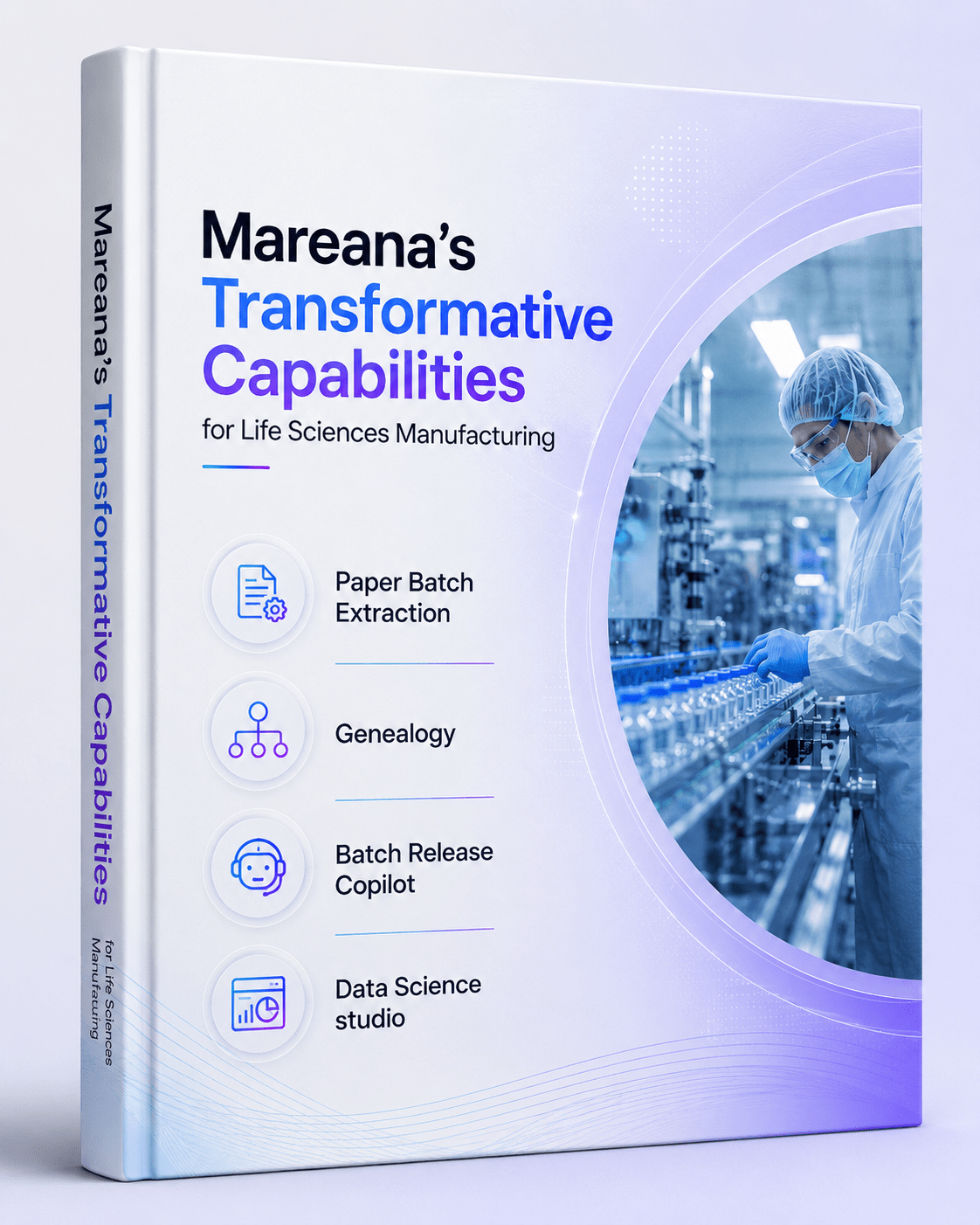
In this whitepaper, you will learn
  • How AI-driven batch record extraction reduces manual review effort

  • Best practices for improving traceability through connected genealogy data

  • How exception-based review approaches accelerate batch release cycles

  • How harmonized analytics environments improve process understanding and decision-making

Good Manufacturing
Practice

Connected Data Deep Insights.

Good Manufacturing
Practice

Connected Data Deep Insights.

/ ANY QUESTIONS? WE'D LOVE TO HELP

Frequently Asked Questions

AI can improve pharmaceutical batch release by automating routine parameter checks, identifying exceptions faster, reducing manual review effort, and helping quality teams focus on critical decisions. This can significantly reduce batch release cycle times while maintaining compliance and product quality standards.

Genealogy provides end-to-end traceability across raw materials, processes, equipment, and finished products. This helps manufacturers perform faster root cause analysis, improve deviation investigations, strengthen compliance, and maintain better visibility into manufacturing relationships and outcomes.

Connected manufacturing data eliminates silos between systems such as MES, LIMS, ERP, QMS, and paper records. This unified view helps manufacturers improve data integrity, accelerate investigations, reduce manual reconciliation work, streamline reporting, and maintain a stronger state of control across operations.

Digitizing paper batch records improves data accuracy, reduces manual entry effort, accelerates data retrieval, and enables faster investigations and reporting. It also supports stronger compliance, audit readiness, and real-time access to manufacturing information across operations.

Pharmaceutical manufacturers can reduce manual effort by connecting batch, quality, and manufacturing data into a unified system that automates data extraction, exception review, traceability, and reporting workflows. This helps teams investigate deviations faster, streamline batch review, and focus more on critical quality decisions.

8 AI use cases to transform your quality assurance.
/ BEFORE YOU GO

8 AI use cases to transform your quality assurance.

By signing up, you agree to the Privacy Policy.