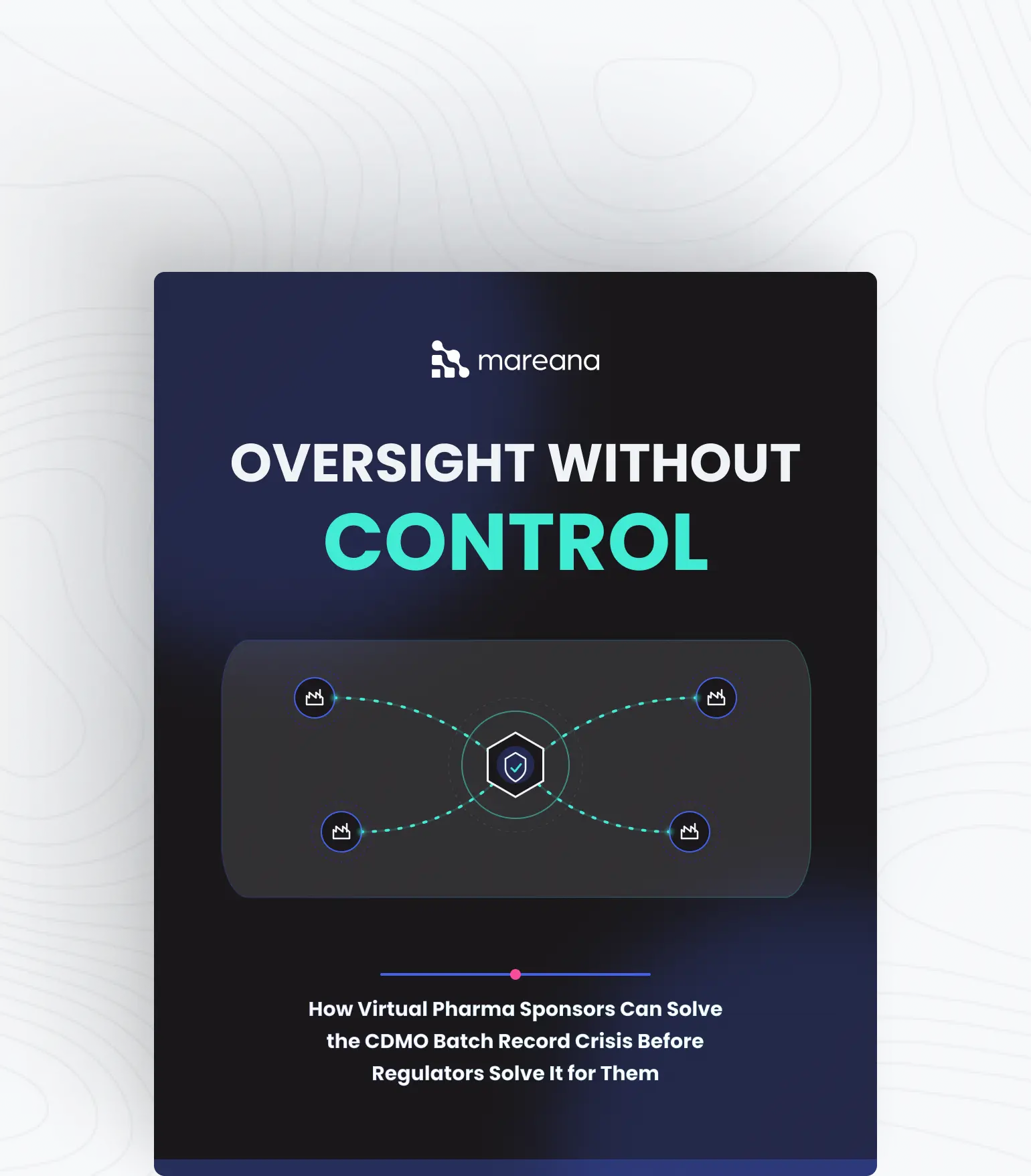






With Mareana, you can achieve genuine, auditable oversight of CDMO manufacturing data and operationalize exception-based review, without requiring your manufacturing partners to alter a single shop-floor workflow.
How specialized document extraction models effectively process unstructured, non-standard CDMO formats.
Why traditional digital solutions like EDMS and web portals fail to resolve the CDMO data bottleneck.
A comprehensive evaluation framework for selecting a sponsor-side batch intelligence platform.
The importance of contextualization in automatically mapping extracted data to specific batches and materials.
Good Manufacturing
Practice
Good Manufacturing
Practice
/ ANY QUESTIONS? WE'D LOVE TO HELP
The “oversight without control” problem refers to the situation where virtual pharmaceutical companies are fully responsible for product quality and regulatory compliance, yet rely on CDMOs for manufacturing data they do not control. This creates a gap where sponsors must make critical release decisions based on delayed, unstructured, and externally generated data.
Paper-based batch records introduce delays, lack standardization, and are often converted into non-searchable PDFs. This creates a “hybrid system” that regulators identify as high-risk for data integrity issues, especially under increasing scrutiny from agencies like the FDA.
Regulatory bodies, particularly the FDA, are shifting toward continuous, data-driven compliance monitoring. The surge in warning letters—many tied to data integrity and vendor oversight—signals that reliance on outdated documentation systems is no longer acceptable.
A sponsor-side intelligence model is a system that operates independently of CDMO infrastructure. It ingests data in any format (paper, PDF, or electronic), extracts and contextualizes it using AI, and enables efficient review through automation and exception-based workflows. Mareana’s Manufacturing Intelligence platform is an example of software that help pharma manufacturers to achieve sponsor-side intelligence.
Key criteria include:
CDMO-agnostic data ingestion
Regulatory validation readiness
Contextual data structuring (e.g., knowledge graphs)
Exception-based workflows
Continuous learning capabilities