

Full Transcript
Access the complete word-for-word transcript for easy reference and accessibility.

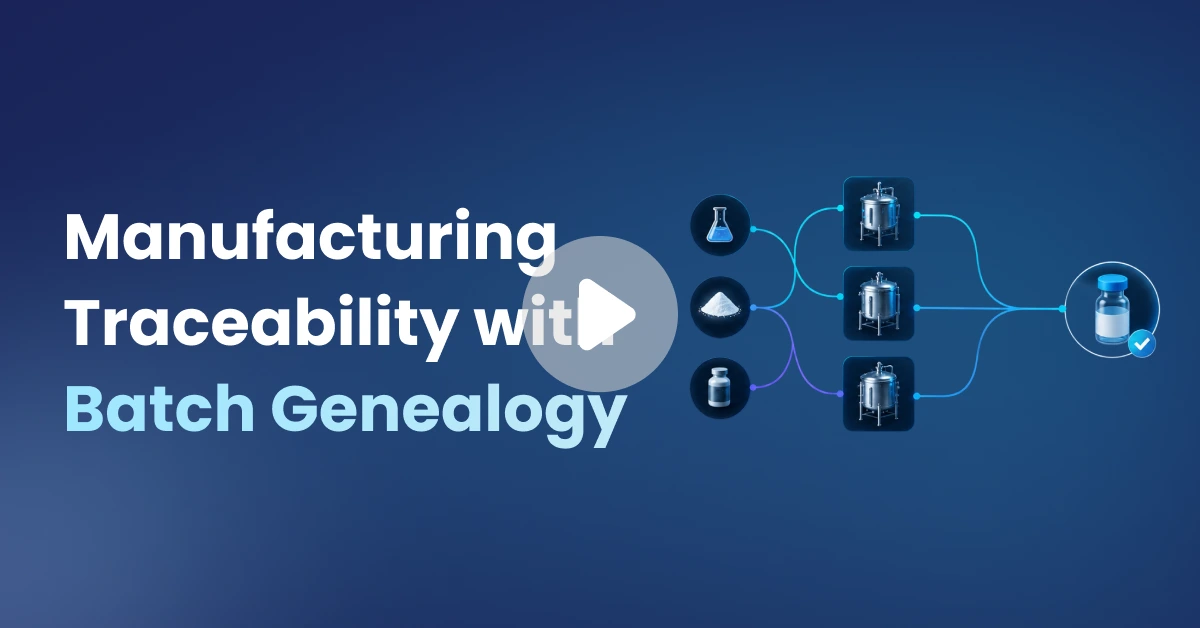
Creating end-to-end manufacturing traceability with batch genealogy. Batch genealogy provides a visual representation of batch relationships and material pathways. For example, batch genealogies created by Mareana map the flow from raw materials on the left to finished products on the right, making complex manufacturing processes easy to understand.
This visibility is a major advantage during investigations. It provides instant access to organised data that accelerates the compliance process.
Whether the information originates from LIMS, MES, paper batch records, or any other sources, the system integrates every data point into a single, cohesive view. The real power lies in the direct link to primary data sources.
Each material or product box contains specific parameters that remain connected to their origin. If a reviewer needs to verify a pH value for a finished good, they can simply click on that detail.
The platform immediately pulls up the specific source snippet, such as the exact page in a paper batch record where that value was first recorded. This level of traceability ensures that every investigation is backed by verifiable primary evidence.
/ ANY QUESTIONS? WE'D LOVE TO HELP
Frequently Asked Questions
Mareana has helped numerous firms in the Pharmaceutical, Chemical, Medical Device, and Industrial Manufacturing industries.
Batch genealogy is a visual record that shows how raw materials move through the manufacturing process to become finished products. It maps every batch relationship, making it easier to understand production pathways, investigate issues, and maintain complete manufacturing traceability.
Batch genealogy improves manufacturing traceability by connecting every raw material, intermediate batch, and finished product in a single visual view. This end-to-end visibility helps manufacturers quickly identify material relationships, trace production history, and support faster quality investigations and regulatory compliance.
During compliance or quality investigations, batch genealogy provides immediate access to organised production data. Instead of manually searching through multiple systems or paper records, reviewers can quickly trace materials, verify process parameters, and access the original source documents, reducing investigation time and improving audit readiness.
Yes. Batch genealogy can consolidate information from multiple sources, including Laboratory Information Management Systems (LIMS), Manufacturing Execution Systems (MES), paper batch records, and other production databases. Bringing all relevant data into one unified view helps eliminate information silos and improves decision-making.
Every material and product within the batch genealogy remains linked to its original data source. For example, if a reviewer needs to verify a recorded pH value, they can select that parameter and immediately access the exact source record—such as the specific page of a paper batch record—where the value was originally documented. This provides complete traceability and verifiable evidence.
End-to-end manufacturing traceability helps manufacturers improve product quality, accelerate investigations, support regulatory compliance, and reduce operational risk. By maintaining a complete record from raw materials to finished products, organisations can quickly identify issues, validate production data, and demonstrate compliance with confidence.
Contact Us
Would you like to learn more about our pharmaceutical manufacturing solutions? Fill out the form below and one of our experts will reach out to you promptly.